Architectural Mosaic Art: Bringing Timeless Craft Into Modern Spaces
When Craft Meets Architecture
There is a quiet shift happening in how we think about surfaces. For decades, mosaic was often treated as a decorative afterthought, something you might see in a historic church or a public fountain, but rarely in a modern living room or kitchen. That has changed. Today, architectural mosaic art has become a serious design tool, one that architects and homeowners alike reach for when they want texture, color, and permanence in a single finish.
The reason is simple: mosaic offers something that paint, tile, or stone alone cannot. It brings a handcrafted quality that feels alive. Every piece is placed by human hands, and that process leaves a mark. The slight variations in color, the way light catches a glass tessera differently at different angles, these are not imperfections. They are the qualities that give a surface depth and personality.
This is where the work of studios like MEC Artworks architectural mosaic art enters the picture. With decades of experience in custom glass and ceramic mosaic, they understand that the medium is not just about pattern. It is about how light moves across a wall, how a pool reflects the sky, and how a backsplash can anchor an entire kitchen design.
Why Mosaic Works in Architecture
Mosaic is one of the oldest architectural finishes in the world. It has been used for thousands of years, from Roman villas to Byzantine churches, because it is durable, beautiful, and surprisingly adaptable. But there is a reason it never went out of style. Mosaic can conform to curves, wrap around columns, and cover surfaces that flat tile cannot handle. It can be made from glass, ceramic, stone, or a mix of materials, and it can be as subtle or as bold as the project demands.
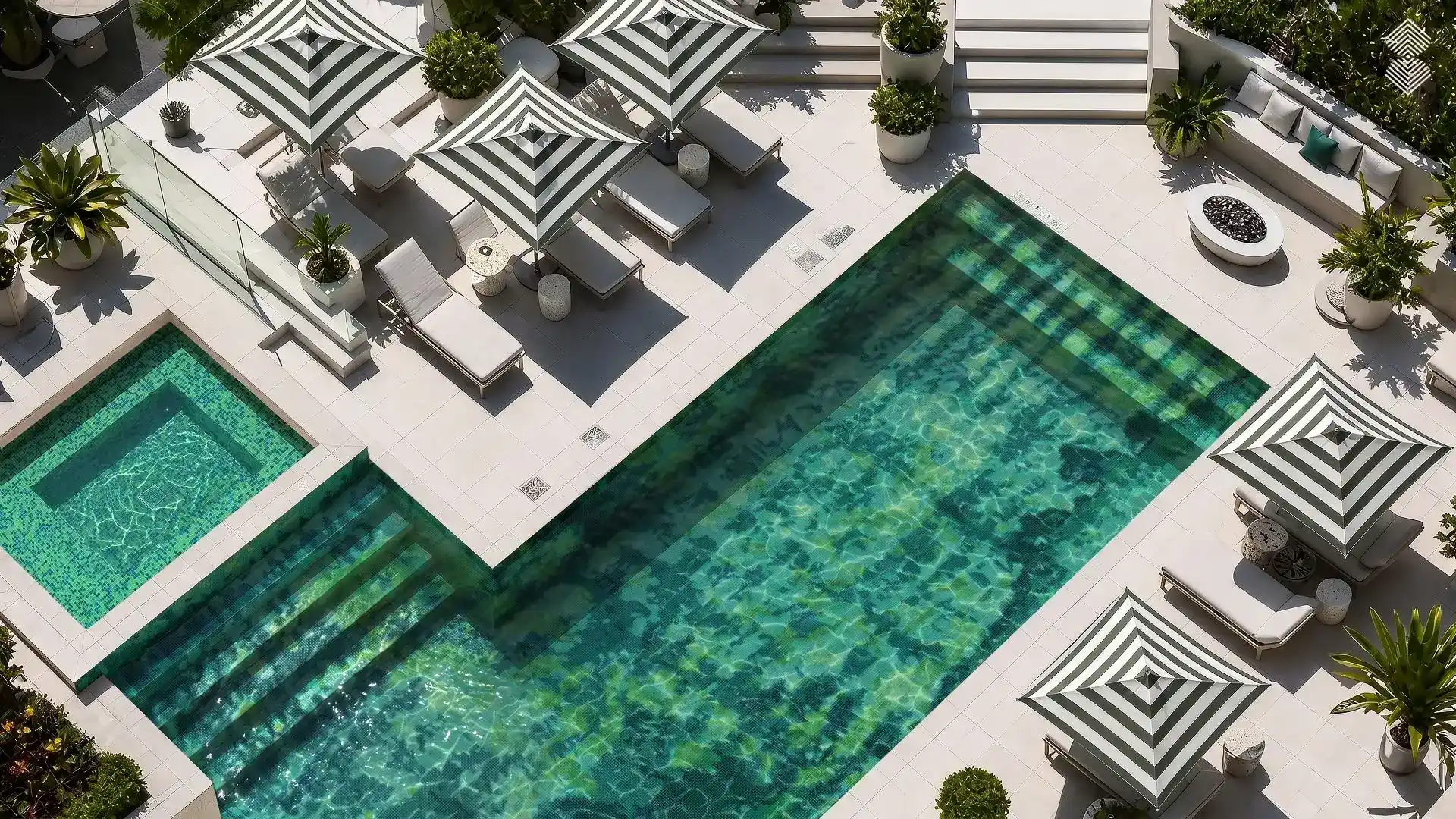
For a pool, mosaic is ideal because it is non-porous and resists water damage. For a kitchen backsplash, it offers a seamless look that is easy to clean. For a feature wall, it becomes a piece of art in its own right. The key is that the design is built into the surface, not applied on top of it. That integration is what makes architectural mosaic art feel permanent and intentional.
What to Look for in a Custom Mosaic
If you are considering a custom mosaic for your home or commercial space, there are a few things to keep in mind. First, think about the material. Glass mosaic tends to be more reflective and vibrant, while ceramic and stone offer a more matte, natural finish. The choice depends on the look you want and the location. For a pool, glass is popular because it sparkles underwater. For a kitchen, ceramic or stone can be easier to maintain and more forgiving with daily use.
Second, consider the scale of the pattern. A small mosaic with tiny tesserae will look intricate up close but may read as a solid color from a distance. A larger pattern with bigger pieces will read more clearly from across the room. There is a trade-off between detail and legibility, and the right choice depends on how the surface will be seen.
Third, do not overlook the role of the installer. A custom mosaic is only as good as the person who sets it. The best designs can be ruined by poor alignment, uneven grout lines, or inconsistent shading. This is where experience matters enormously. Studios that have been doing this work for decades, like the team behind MEC Artworks architectural mosaic art, know how to handle the technical challenges that come with complex installations.
The Role of Light and Color
One of the most exciting aspects of architectural mosaic art is how it interacts with light. Glass tesserae, in particular, can change appearance depending on the time of day and the angle of the sun. A wall that looks cool blue in the morning can shift to a warm teal in the afternoon. This dynamic quality is impossible to achieve with paint or printed tile.
Color selection is also critical. Neutral tones and earth tones tend to age well and fit a wide range of styles. Bright colors can be stunning but require careful placement to avoid overwhelming a room. A good designer will help you find a balance that feels right for your space.
Where to Use Architectural Mosaic
While pools and kitchens are the most common applications, architectural mosaic art works in many other places. Entryways, bathroom walls, fireplace surrounds, and even exterior facades can all benefit from the texture and depth that mosaic provides. The key is to treat it as part of the architecture, not just as decoration. A mosaic that wraps around a column or flows from a countertop into a backsplash creates a sense of continuity that feels intentional.
Another often-overlooked use is in commercial spaces. Lobbies, hotel lobbies, restaurant bars, and retail stores all use mosaic to create a memorable impression. Because each piece is custom, the design can incorporate a logo, a brand color, or a specific motif that ties the space to the company identity.
Practical Considerations
There are a few things to be aware of before committing to a custom mosaic. First, it is a slower process than buying off-the-shelf tile. A custom design requires planning, fabrication, and careful installation. The timeline can be several weeks or more, depending on the complexity. Second, the cost is higher than standard tile, but that reflects the labor and artistry involved. Third, maintenance is straightforward, most mosaics can be cleaned with mild soap and water, but the grout lines will need occasional attention to prevent stains.
None of these are reasons to avoid mosaic. They are simply factors to plan for. The result, when done well, is a surface that lasts for decades and never goes out of style.
The Craft Behind the Art
What sets custom mosaic apart from mass-produced tile is that every piece is placed by hand. The artist or artisan works from a full-scale cartoon, selecting each tessera for color, shape, and position. The process is slow and deliberate, but it allows for a level of precision and creativity that machines cannot match. This is especially true for complex designs that involve curves, gradients, or mixed materials.

Studios that have been in the field for decades, like MEC Artworks architectural mosaic art, have developed techniques for handling these challenges. They know how to choose the right adhesive, how to manage expansion and contraction, and how to ensure that the final surface is flat and even. This expertise is what turns a good design into a great installation.
Final Thoughts
Architectural mosaic art is not a trend. It is a craft that has been refined over centuries, and it continues to evolve as new materials and techniques emerge. Whether you are building a new home, renovating a kitchen, or designing a commercial space, mosaic offers a way to add beauty and durability that few other finishes can match. The key is to work with people who understand the medium and who can guide you through the choices that matter most.
 Twitter
 Instagram
 YouTube
 Pinterest